Wednesday, 23 April 2014

Art Direction

As a topic for art direction I want to talk about character design and the ways in which it portrays the character of an individual. My example as you can probably guess by the picture is the comic book and film of Watchmen as the story has a diverse roster of characters who’s personalities are portrayed very well through their appearance.


For a bit of back story: It begins in the late 1930’s with a group called Minutemen. The Minutemen were formed because costumed heroes had become a harmless fad that people wanted to be a part of, the artist has used colours here to portray that everything was cheerful and fun. The colours are bold and eye catching, complimentary colours are used, most colours are primary and secondary, most of them are very saturated, and there are deep blacks that create contrast.

Then 40 years pass, the cold war begins among the passing of other wars, corruption, multiple hero deaths and the birth of a real super hero and we're left with a very different looking group of heroes with a grudgy and much less vibrant colour pallet, with the exception of the bright blue Doctor Manhattan but I’ll get to that later. This new and different colour pallet shows that very 
unfortunate events have occurred since the first set of costumed heroes.

http://puu.sh/8l2eg.jpg
This is silk spectre, her costume is an over sexualised tight latex suit that is coloured with the eye grabbing pairing of black and yellow. Her mother was a member of Minutemen who went by the same way; her mother loved the attention she received from her sexy pin up girl persona. Once her mother retired she wanted her daughter to follow suit by forcing her ambitions upon her.
 

Next up we have The Comedian, his costumes change a lot throughout the narrative as his career as a hero begins in the Minutemen, his later costumes consisted of the flashy stars and stripes. His costumes often consisted of comedic imagery, for example his costume he wore while he was in Minutemen was a bright jester outfit. He is also the barer of the famous smiley face badge. His whole persona is that of a tough guy who finds everything humours, he uses this persona of his as a mask to cover up lifelong regret of his unjust actions.


This is Ozymandias and his costume is much like a costume seen in minutemen in that it stands out with contrasting purple and yellow. This costume design reflects his great ego, he wants to stand out as a superior human as he claims to be able to catch a bullet. He strives to be seen as a modern day version of the Egyptian Pharaoh ‘Ramesses the Great’. His appreciation for Ramesses is not only portrayed through his name, but also the theme of ancient Egypt is seen in the architecture and interior decoration of the buildings he owns.


Probably the most extreme personality of the members of the watchmen is Rorschach. He can be briefly summed up as a severely ill human detective journal. His appearance reflects this as he dresses as a stereotypical noir detective with his face covered in a Rorschach test as if he's showing everyone that he's crazy.


And finally there's Doctor Manhattan, although he was once a human what he is now couldn't be much further from one. His body shape is that of a human, but that's as human his appearance goes. The piercing bright blue glow of his skin, the white out eyes and the neutral and un phased expression constantly on his face contribute to his appearance of being truly alien from everyone else

.


I hope I have successfully been able to show how well Watchmen's diverse selection of character designs are used to visually describe the individuals of the story and how important the art direction of character design is.

http://puu.sh/8l3dJ.jpg

Bibliography:

Watchmen Film (2009) Zack Snyder

Watchmen Comic Book (1987) Alan Moore

Tuesday, 22 April 2014

Video Game History Part 3

 http://www.culturegeek.tn/wp-content/uploads/2014/01/laracroftevolution2.jpg


http://puu.sh/8jLpw.jpgFrom the year 2000 onwards video games saw a leap in graphics with the introduction of the Sony Playstation2 in 2000, Nintendo's GameCube in 2001 and Microsoft's Xbox in 2002. Games started to look less like implied versions of what they're supposed to look like and more like fairly realistic representations of what they're supposed to look like. And then with the release of the Xbox 360 in 2005 and the Playstation3 in 2006 the visuals of games as a whole started to successfully represent realism. And now with the current generation of consoles realism is something that appears to be often achieved successfully with Infamous Second Son and Metal Gear Solid V: Ground Zeroes.

http://assets1.ignimgs.com/2013/09/19/metal-gear-solid-x-the-phantom-pains01jpg-e94a81.jpg 


Prior to the PS2 era when naturalistic looking games were much more of a challenge to look good due to hardware limitations it made sense to make a more stylised game such as Mario 64 (1996) and Banjo-Kazooie (1998). Creating realistic organic shapes with limited polygons was difficult, and complex values and colour in textures was hard to create with such small texture sheets, so making caricature like characters with a saturated colour pallet was the way to make a good looking game. So now with advancements in technology and the ability to make very naturalistic looking games, why do we still see simple and stylised games?

The After Math A HTC One, a PlayStation 4 and a Chromebook with plenty of pixels 

The thing that draws me towards naturalistic looking games is usually how impressive they look games like Crysis (2007) and Metal Gear Solid 3 (2004) both examples of very good looking games for their time, and it's great to see this and watch it continue to improve. But as of late the rate of how the looks of games are improving in terms of realism is plateauing off, having more triangles in a model just isn't improving the looks that much. For example Kotaku reported that the protagonist of Infamous Second son's character model consists of more than 60000 triangles, 7500 of which are in his beanie hat, this number seems highly unnecessary considering it's a simple hat, I wouldn't be surprised if the triangle count of that hat was halved the majority of players wouldn't bat an eyelid. My point is that naturalistic games are becoming stale, soon it's not even going to be a talking point weather a game looks like it's portrayed realism well.
http://static.gamesradar.com/images/mb/GamesRadar/us/Daily/2010/07-Jul/19/Limbo/limbo_screenshot_1--article_image.jpg 
http://static.giantbomb.com/uploads/original/3/35829/1722598-outland.pngRecent games that don't strive to look naturalistic tap into a visual communication of atmosphere and emotion that is rarely seen in most modern naturalistic looking games. I think the best example for this is Limbo (2010), Limbo's visuals are very simple: monochrome and silhouetted. The game possesses this eerie feel about it, you can tell that there's something not quite right about the game, this almost makes it feel like a horror game not horror like jump scares, blood or fear of playing the game, just a strange fear of the unknown. The game really doesn't tell you much hence the fear of the unknown, which presses you to progress in the game. Other examples of recent games that use it's visual style in this way to create atmosphere and emotion about the game include Journey (2012) and Outland (2011).
To conclude the reason I think we have stylised games on the market today is because these games posses an atmosphere and emotion in their visuals that naturalistic games cannot do in the same way. I think we will continue to see more and more stylised games in the future as the novelty of games which are a carbon copy of real life will wear off and consumers will want these visually exiting experiences.

Bibliography:
http://kotaku.com/how-infamous-second-son-manages-to-look-so-good-1553220653

Images:
http://www.culturegeek.tn/la-next-gen-tech-lincroyable-evolution-de-lara-croft/

http://www.dualshockers.com/2014/03/25/infamous-second-son-the-magic-behind-the-beauty-explained-in-depth-awesome-concept-art-revealed/

http://uk.ign.com/images/games/metal-gear-solid-ground-zeroes-ps3-141058/523b36ce967084c470e94a81 
  

http://www.gamespot.com/articles/super-mario-64-virtual-console-review/1100-6162119/

http://www.computerandvideogames.com/viewer.php?id=187912&mode=article

http://www.engadget.com/2013/02/22/the-after-math-playstation-4-special/

http://www.gamesradar.com/limbo-review/

http://www.giantbomb.com/outland/3030-32552/


Monday, 21 April 2014

Video Game History Part 2

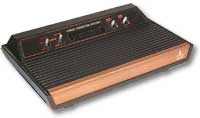
Original Woodgrain Atari
1980-1999 Was a very eventful time period for video games, there was a huge surge of popularity in video games in the early 80's with the success of the Atari 2600. The infamous videogame crash of 1983 threatened the future of the industry. The 80's brought numerous consoles including the NES (1985), the Sega Mega Drive (1988) and the Nintendo Game Boy. The 90's followed suit and continued to add to
the saturated market of consoles with the SNES (1991), 
the Sony PlayStation (1995) and the Sega Dreamcast (1999). Most importantly, and what the rest of this blog post will be about, these two decades brought us the beginnings of video game characters and game series'.


The fact that 9 out of the top 10 characters in Empire's "50 Greatest Video Game Characters" originated between 1980 and 1999 shows how important this time period was for characters in video games. Classic characters such as Mario and Link came from the 80's and are still in many games today, but the majority of the characters from the 80's such as Pac Man and the frog from Frogger aren't what I'd consider characters, they're more faces of a game or franchise, I'd go as far as to say that Mario is also merely a face of a franchise rather than a character. What I mean by this is that I think a character should have some kind of narrative weather it be shown through gameplay or dialogue that goes beyond "Cross the Road" or "Find the Princess". 
 
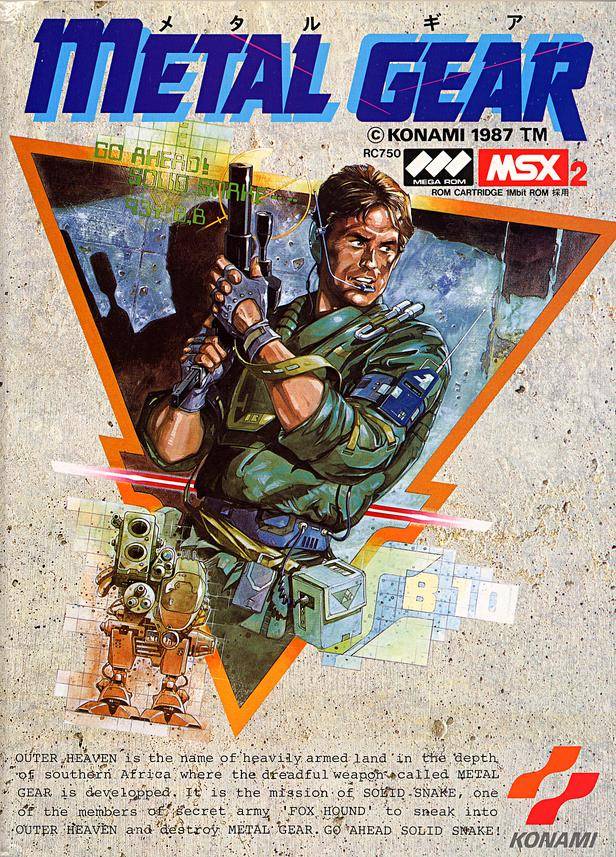
Later into the 80's and into the 90's we start to see characters pop up in games more and more, in 1987 Solid Snake is introduced in the first Metal Gear game and in 1990 we also see a roster of characters in one of the many point and click adventure games The Secret of Monkey Island in 1990.


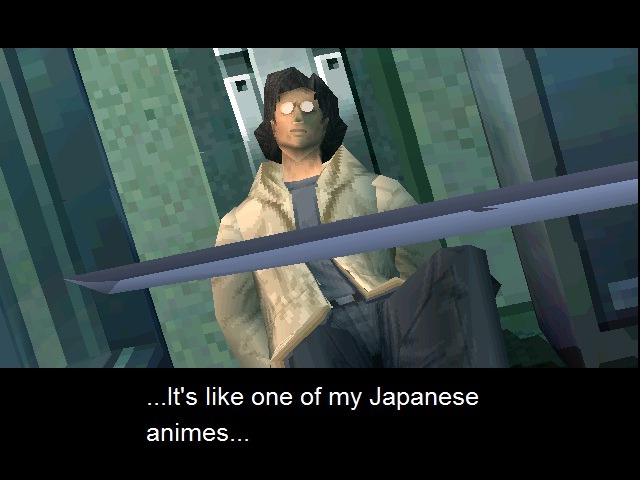
In the first two Metal Gear games the dialogue was presented as text, which isn't a huge problem but you're never going to interprete the character exactly the way the game creators intended you to. This is because the voice and the way the character says the words in your head as you read the text will be based off of your past experiences of voices and characters. The more unique portrayal of characters came with the introduction of voice acting, although the majority of voice acting and writing itself was not very good, a good example of this would be listening to the tragically over dramatic dialogue of the original Resident Evil game released in 1996.
http://jryanmvg.files.wordpress.com/2014/03/metal-gear-solid.jpg

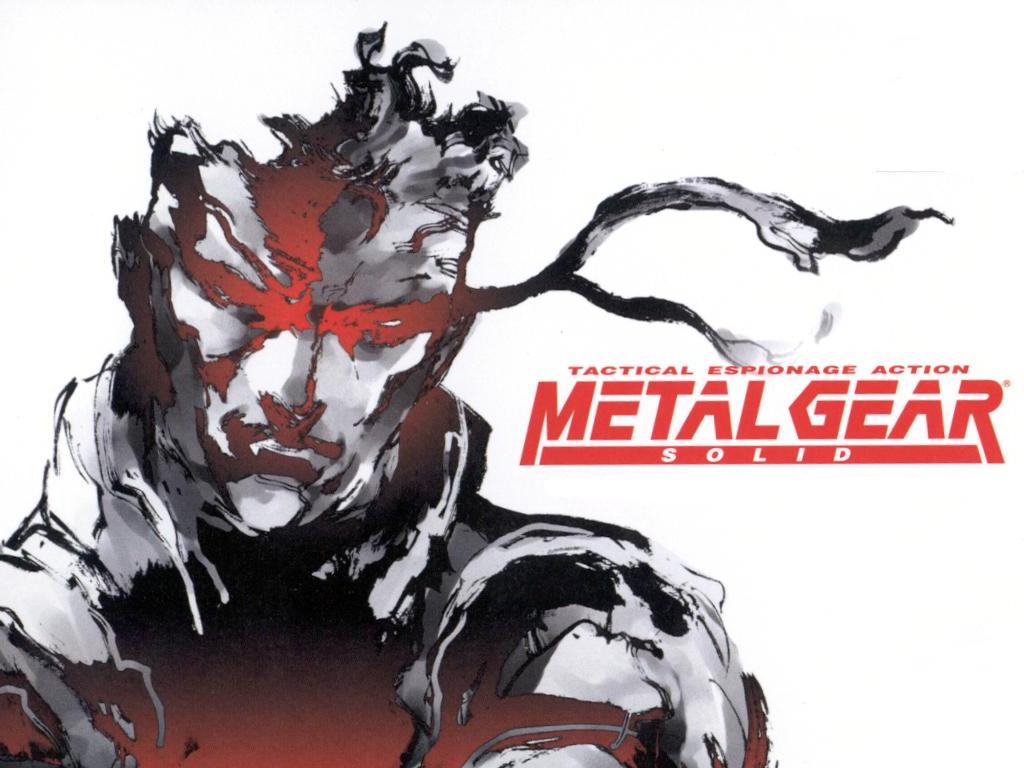
 In 1998 voice acting in games took a giant leap forward with Metal Gear Solid which with the exception of a few lines seemed to be the first game that put considerable effort into voice acting. Even though all of the characters and plot are pretty much a satire of action films that came before it, I felt that as I was playing the game I was getting to understand all of the characters and their purpose in the plot and I saw the characters change as the game progressed. I feel that Metal Gear Solid set the benchmark in video games for voice acting and the portrayal of characters.

So to conclude, at the start of the 80's we had plenty of games but not many of them really had characters, just empty protagonists with little to no narrative assigned to them. Then as the years went on we saw actual characters appear in games with their dialogue portrayed through text. Then in the 90's and leading into the 00's voice acting was introduced which improved the portrayal of characters in video games which peaked with Metal Gear Solid. So the industry came a long way in 20 years going from a yellow circle eating smaller white circles to fully fleshed out characters in engaging narratives.


Bibliography:

https://atariage.com/2600/index.html?SystemID=2600

http://www.gamesradar.com/consoles-of-the-80s/

http://www.gamesradar.com/consoles-of-the-90s/

http://www.denofgeek.com/games/24531/the-1983-videogame-crash-what-went-wrong-and-could-it-happen-again

http://www.gamingbus.com/2012/08/06/the-growth-of-voice-acting-in-video-games/

http://www.empireonline.com/features/50-greatest-video-game-characters/default.asp?film=50 

Images in order:

 http://www.gamesradar.com/consoles-of-the-90s/?page=6

 https://atariage.com/2600/index.html?SystemID=2600

 http://tvtropes.org/pmwiki/pmwiki.php/VideoGame/DonkeyKong

 http://metalgear.wikia.com/wiki/Metal_Gear?file=Metal_Gear.jpg

 http://www.allthatsepic.com/game-reviews/resident-evil-review-where-the-evil-began/

 http://jryanmvg.wordpress.com/2014/03/14/review-and-rating-metal-gear-solid-playstation/

http://www.neogaf.com/forum/showthread.php?p=47066773

Saturday, 15 February 2014

Cubeecraft Side Project


So during the seminar before last Emma suggested that we create a Cubeecraft character in 3ds Max, rather than as paper craft. So straight away I knew I wanted to make Catbug from Bravest Warriors because I thought that he'd look cool in the blockey Cubeecraft style. 
Seen as the Cubeecraft model is designed for human or humanoids I made some adjustments to the proportions so that they would suit Catbug's body type, while still in keeping with the Cubeecraft style.


And rather than drawing his neutral facial expression I drew the one above, because adorable. So damn adorable.


 So this is how it ended up looking:


I'm pretty pleased with how this turned out, it's really nice to do these little and less challenging projects to break up staring at a transit van for hours on end. Also I found out that even with something as simple as this I can still terribly mess up unwrapping and having to re unwrap 3 times.

 Image Sources:

 https://www.youtube.com/watch?v=xc8e0ASIZyQ (Still from video)
 http://www.cubeecraft.com/blog/
 https://www.youtube.com/watch?v=rFWb7DG7zTc (Still from video)

Saturday, 30 November 2013

Wheely Bin Project


For this I tried not to build a generic looking wheely bin, I found this one that looked a bit more challenging to create. The irregular shape of the bin caused my tri count to rise, sculpting the indent around the wheels and the curvature of the lid proved to be most taxing on the tri limit.


Another reason I choose this bin was that it had imagery on both the front and sides, most other bins I found looked quite bland and uninteresting. The problem with having the '56' on the both left and right meant that the left and right side needed their own individual texture space, which meant that the overall resolution of the textures would be lower than if the left and right side use the same texture space. Fortunately the resolution didn't prove to be a massive issue when the texture was applied to the model.

In hindsight I should have used smoothing groups on the indent around the wheel to improve the resemblance to the reference. I also made a big mistake for the hand in, the settings for the alpha maps were wrong on the version I handed in, so the wheels had white squares around them. Apart from these issues I am pleased with the overall outcome of the project.


Friday, 8 November 2013

First Project: Dalek

The first decision I saw that I had to make when I looked at the tri limit of 1500 and the reference images was which are the key parts to the dalek, and what details were insignificant and therefore didn't need to be included in my model.

I put off most of the decision making to begin with so that I could build the bottom base of it first and see how far each tri could go. The thing that worried me most at that stage was weather to include the 56 tri devouring balls onto my model or not. If I didn't have them, I'd be able to put greater detail into the head and midsection of the model, and hopefully make it look really good; but then there would be great detail on the top half, and then a pretty blank bottom half. 

So I went about trying different spheres and tri density and ended up with the lowest possible tri count geosphere and removing 6 of it's tris to get a semi sphere. I felt that this was the most suitable approach, any more circular would have taken up so many more tris and the only other option I saw was to make a hexagon with a point on it to simulate a semi sphere. I then calculated that it would take up 672 tris for just the balls, so I rolled with that.


I ended up with a 1486 tri count basic looking Dalek, it's far from a masterpiece but I'm glad with how well it went. Although the use of the balls left me with very few tirs for the rest of the model, the model doesn't appear to lack inconsistency in detail which is what I would prefer rather than making a Dalek that looks half finished.

Friday, 1 November 2013

History of Video Games Part 1

In the world we currently live in where our day to day lives are run by computers and our spare time is a slave to video games, it's hard to think that only very recently we have had these two inventions. Although the purpose of this post is to look into the history of video games, I will also be looking at the history of computers, seen as we would not have video games without the invention of the computer.

In 1822 an Englishman named Charles Babbage designed the very first computer, named 'The Difference Engine', designed to calculate equations and then print the results off. So not only did Babbage design the first computer, he also designed a modern day printer built into the computer, how convenient. Unfortunately Babbage never actually built within his lifetime, but was built in 2002 and now is kept inside the London Science Museum.

During the Second World War around 80 years after Babbage's death computers made the leap to becoming electric digital computers. At the size of a large room these computers were a great improvement from The Difference Engine, but far from your contemporary smartphone or PC. There was nothing 'personal' about these computers either, they were funded by large company's and built by large teams, and needed a team of people to use it. It wasn't until the 1960's that the 'personal' was put into 'Personal Computer'.

Now onto video games; The first interactive electronic game was named: Cathode Ray Tube Amusement Device. It was made in 1947 by an American named Thomas T. Goldsmith Jr and was playable on a Cathode Ray Tube. The game was a missile simulator by which Goldsmith was inspired by radar displays used in the Second World War.

Although the Cathode Ray Tube Amusement Device technically is the first video game,  in my opinion I don't consider it as the first video game. What I mean by this is the reason I play video games is to enter another world, and become engaged in a situation I'm not going to be able to do in real life, which is why I don't play football games or bus simulators. The CRT Amusement Device is just a copy of what can already be done in real life, granted not everyone could fire missiles in real life, but my point is that it's concept is from something you can do in real life. The first handful of video games followed this pattern, 'Chess' was digital chess, 'Tennis for Two' was digital tennis, and so on you get the idea. I feel that the first video game that took the player somewhere the outside world won't be taking them any time soon was 'Spacewar!'

Spacewar! was made in 1961 and took it's players into space in spaceships to battle other players. Spacewar! did something new, today there's loads of 2D top down space shooting games, but back then it was a whole new idea, and most importantly it wasn't a direct copy of something that you can do in real life. Spacewar! was the first step towards what video games are today, we still have games that achieve to be carbon copies of real life today, but a lot of games now create new worlds and/or interesting narratives that take us away from reality as we play them.The way I see it, Spacewar! was the first video game.